
The Falls Church City Owner of Record
Falls Church's Real Property Database pairs the assessment owner field with a full parcel card. The official instructions describe the RPC, situs and mailing addresses, annual assessment values, physical traits, sales data, and deed or plat references. Live labels can vary. When you run a current owner search, note the parcel key. Also note the date you checked the record. The owner-of-record entry works well for assessment and notice purposes. It is not a title certification.
| Owner field | Name displayed by the City assessment roll; it may lag a newer filing. |
|---|---|
| Situs address | Physical property address attached to the parcel. |
| Mailing address | Address used for assessment and tax notices; it can differ from situs. |
| RPC | Eight-digit City real-property code used to identify the parcel. |
| Deed reference | Index clue for the recorded instrument; confirm the image with the clerk. |
| Assessment date | Annual value is as of January 1, not a deed date or sale date. |
The owner field is not a list of occupants. A mailing address may belong to another home, a business, a trustee, or an agent. Treat the entry as an assessment record, and turn to the latest deed whenever a transfer date matters.
Falls Church Current Owner Update Timing
Falls Church says its external assessment database runs about a week behind. A sale, name change, or new mailing address may show up in a recorded deed first. The owner field can lag behind it. The City also reviews sales before folding them into assessments. An entry can shift during that review year. Check the date on the parcel card. Check the recording date on the newest deed too. Then state who the current owner is. A lagging card does not mean a sale failed to close or record.
For a property-specific discrepancy, call Real Estate Assessment at 703-248-5022 or email realestateassessor@fallschurchva.gov. The office sits at Gage House, 401 Great Falls Street. Staff suggest calling ahead, since field work and meetings can limit availability.
Falls Church Situs and Mailing Details
Situs is the parcel's physical location. Mailing address is where the City sends assessment and tax notices. The two often differ. An owner may route mail elsewhere, or a trust, estate, or company may take notices through an agent. Neither address proves occupancy or every legal interest. Keep both values with the RPC. That way a tax bill never gets mistaken for the property's location.
Falls Church sits close to Arlington and Fairfax. A postal city or ZIP may not settle jurisdiction. The City's Address Finder recommends confirming postal details with USPS and checking map boundaries. When an address label looks ambiguous, verify the City parcel and RPC before searching deeds in Arlington or Fairfax.
Falls Church Owner Card Detail
The parcel-detail view holds the owner field, parcel key, situs, mailing address, annual values, and physical characteristics. It also lists any deed or plat reference. The City property search takes an address or RPC. A Street Listing helps when the unit or house number is unknown. It does not take owner-name queries. Someone hunting a current owner with only a name must use a recorded party index. The assessment database cannot be assumed to find every parcel tied to that person.
The actDataScout parcel interface is the City's linked assessment system. Its current official instructions spell out the search route. The screenshot shows an assessment detail screen, not a promise of today's fields.
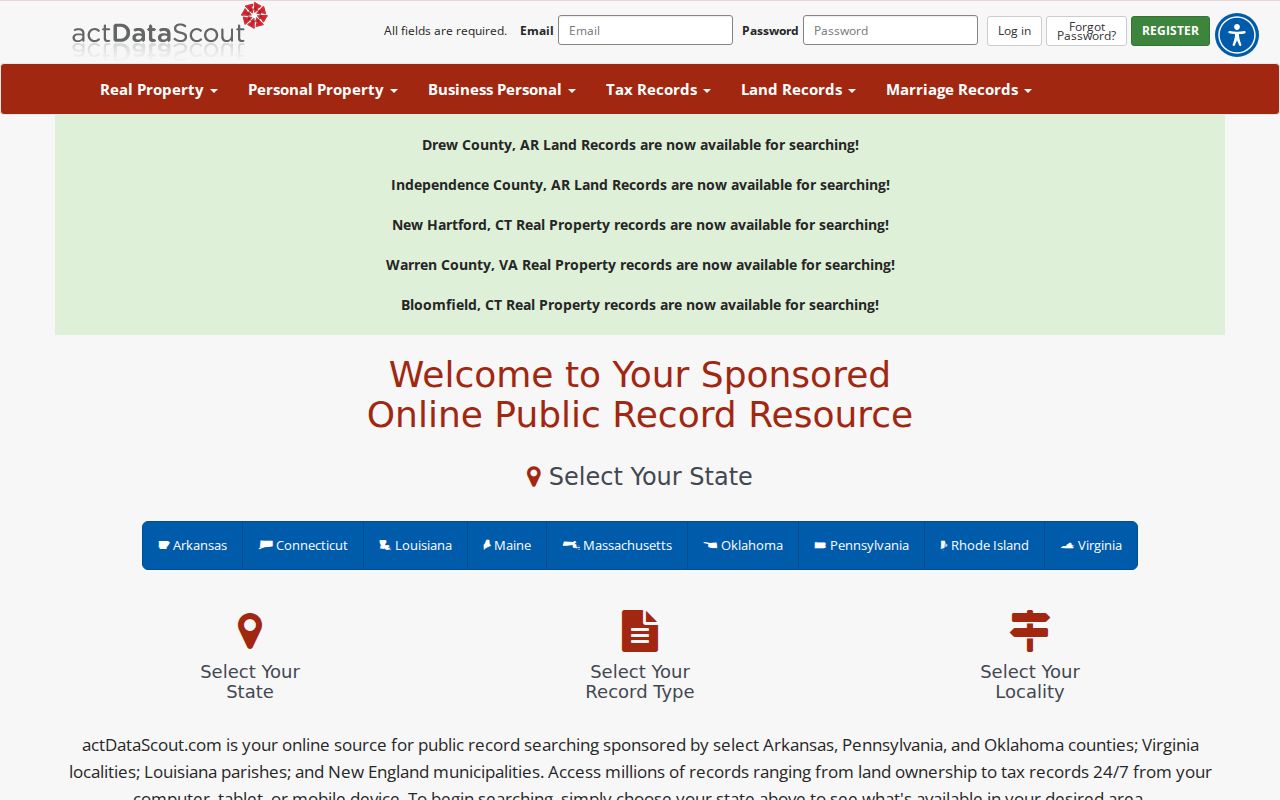
Treat the live card as the source for what displays now, and compare any recent change against the land-record date.
Confirm the Current Falls Church Grantee
The latest recorded grantee is the best deed-index check on a recent transfer. Arlington records Falls Church instruments from 1988 forward. Fairfax County holds the city's earlier deeds. Search the newest deed with the card's reference or the current owner name. Then confirm the legal description and RPC match the parcel in question. A new deed may postdate the assessment update. But a grantee name still needs context from the instrument itself.
- Open the City card by address or RPC and record the owner field and date checked.
- Use the deed reference or party name to locate the newest Arlington instrument.
- Compare the grantee, recording date, vesting language, and parcel description.
- If the instrument is pre-1988, continue the record check with Fairfax County.
- Owner of record
- The name displayed on the City assessment roll at its latest update.
- Vesting
- The way an instrument names the party receiving or holding the interest.
- Registered agent
- A contact listed for an entity, not necessarily a beneficial owner.
LLC, Trust, or Estate Owner Names
A current owner field may list an LLC, trust, estate, trustee, or executor. Read the recorded deed to learn how the interest is vested. It also shows who signed in what role. Virginia SCC CIS can reveal an entity's public filing status and registered agent. It cannot show who privately benefits from the property. A public agent address is not the owner's home, nor proof of control.
For estates, Arlington Probate offers STARR indexes from 1997 onward. Courthouse kiosk indexes cover 1800-1996. A CC-1612 real-estate affidavit can document an intestate transfer. Confirming current ownership still comes down to matching the resulting recorded instrument. It must match the right parcel description.
The Virginia SCC entity search is the official source for business filings and agent information.
Separate Current Owner from Loan Status
A deed of trust or lien works differently from a deed. The borrower is not the owner in that filing. Falls Church owners should also remember that liens name debt, not title. A paid-off loan triggers a duty in Arlington. The lender must record a Certificate of Satisfaction within 90 days. That release is its own filing, so check it apart from the owner field. An owner card can even show an old loan instrument. A later satisfaction can sit elsewhere in the record trail.
Buying or refinancing? Send the deed and release papers to a title professional. The owner-of-record question only asks whose name is on record. It looks at the assessment roll and the newest deed. It says nothing about whether an encumbrance still has priority or can be enforced.
Falls Church Owner Alerts and Privacy
Arlington Land Records Property Alerts will notify a registrant. Alerts match new filings to chosen property criteria. The alert is only a notice. It is not a fraud block or a title opinion. When a filing looks wrong, pull the recorded document itself and call the clerk. Virginia's Address Confidentiality Program also gives qualifying participants a substitute address. Some voter or personal records carry extra protections.
Use a mailing address only for a lawful property purpose. A current owner search should confirm a parcel or a recorded transfer. It should not target a person. If a name looks protected or inconsistent, stop there. Ask the custodian which public record may lawfully be used.
Contact Clues in a Falls Church Owner Record
The City mailing address shows where official notices go. It is not an invitation for unrelated contact. A billing or assessment dispute belongs with the right City office. A title question goes to a title company or attorney, and record copies come from the circuit clerk. Stick to a disclosed contact route, keep it tied to a real property matter, and respect confidentiality rules.
Read the assessment roll, the latest grantee, and the GIS map together, but keep them distinct. The City's owner field depends on update timing. The deed proves a recorded transfer. The map just supplies reference geometry. For the fuller method, see the Falls Church City ownership lookup page.
- Owner of record
- City assessment name attached to a parcel.
- Recording lag
- Time between a city change and the external assessment database refresh.
- Situs address
- The physical address of the parcel.
- Mailing address
- The destination for assessment and tax notices.
Lawful use. Use Falls Church City owner information only for a legitimate property, tax, or recorded-interest question. Do not use a public mailing address to stalk, harass, threaten, or harm any person.