
Tracing Falls Church City Former Owners
A chain of title lines up every deed that moved a parcel from one owner of record to the next. For land inside the city today, Arlington's land-record index holds instruments recorded from 1988 forward. Anything older sits with the Fairfax County Circuit Court. That single cutoff explains why a Falls Church property search can appear to stop. It can seem to stop cold at 1988. The assessment land book helps too. It keeps yearly ownership, deed and plat references, sales, and property details. It often points to the right record when an address changed along the way.
| Source | Years It Covers | Where Held | What It Shows |
|---|---|---|---|
| Arlington land-record index | Falls Church filings from 1988 forward | Arlington Circuit Court | Current deeds, parties, date, document type, and reference. |
| Fairfax deed index and books | Falls Church instruments recorded before 1988 | Fairfax Circuit Court | Earlier grantor-grantee links and deed images. |
| City annual land book | Annual assessment history; exact earliest year not confirmed | Falls Church Real Estate Assessment | Ownership, deed and plat references, sales, and characteristics. |
| Historic plats and directories | Specific Falls Church runs not verified | Land records, City Planning, library, archives | Lot context and household clues, not a substitute for title. |
Start with Arlington for any modern transfer. When a deed's prior reference reaches back before 1988, move the property records search to Fairfax. Keep chasing the legal description there. Old names and addresses can puzzle a searcher. The City land book, a recorded plat, and library directories all work as clues. The oldest Falls Church deed-book years are not stated. Directory runs vary. Ask the custodian to confirm the right volume before trusting any online image set as complete.
Switch from Arlington to Fairfax
Falls Church became an independent city in 1948. For deed research, though, the year that matters is 1988. Arlington's Clerk records city documents from that point on. Pre-1988 documents stayed with Fairfax. A searcher who quits in Arlington may hit an abrupt wall. The record has simply moved to another courthouse. Read the latest deed's prior-instrument reference. Note the earlier book, page, or recording number. Ask Fairfax to pull it. A venue change is not proof of annexation or a vanished owner. Street numbers, mailing ZIPs, and neighborhood labels can all shift while the land stays the same. Carry the parcel's legal description through every reference. The prior instrument reference may be spotty. Use the City RPC and the clerk's index guidance to narrow the property records search.
Grantor-Grantee Steps for Past Owners
A grantor conveys an interest. A grantee takes it. Tracing past owners means reading the newest deed. Then you hunt that deed's grantor in the role of grantee on the earlier transfer. You repeat the loop through the legal description and prior-document reference. One caution: the sequence is not a roster of everyone tied to the parcel. Mortgages, corrections, estate affidavits, and easements fill the land index too. Yet not all of them pass ownership.
| Latest recorded deed | Capture grantee, grantor, recording date, document type, and land description. |
|---|---|
| Prior deed reference | Search the cited instrument in the correct court's index. |
| Prior grantee | Check that party against the earlier deed's legal description. |
| Venue change | Move to Fairfax when the Falls Church filing predates 1988. |
| Gap or estate | Search probate and fiduciary instruments before inferring a missing sale. |
Cloud Search and Deed Images
Arlington Cloud Search is where Falls Church deed records from 1988 forward live online. A free nonsubscriber registration gets you selected index data. Images are another matter. A $50 monthly subscription opens the deed images themselves. That access comes only after a signed, notarized application. Why pay for the image? A short index result may omit the next prior reference. It may also omit the legal description or a signer's capacity. The portal page itself is just an entrance and access gate. So expect a login wall rather than a sample parcel chain until you subscribe.
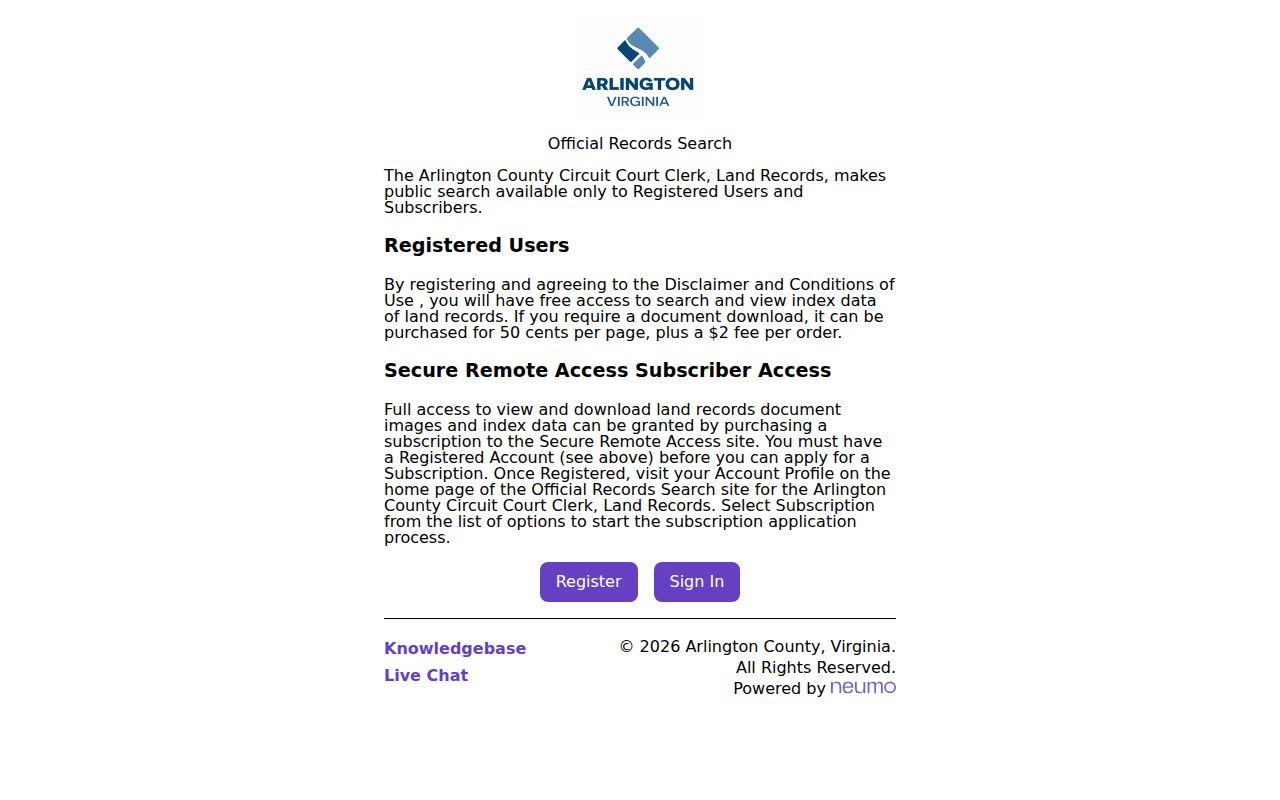
Save each index reference before moving backward so a later search can be repeated.
Walk the Falls Church Deed Chain Backward
Work backward. Start with the most recent deed, then trace its grantor back to an earlier deed. That same party appears there as grantee. At every step, record each instrument reference and compare the legal description. Estates and trusts need extra care. Read the capacity stated on the document, and check probate records when relevant. A clean chain rests on recorded instruments. It never rests on the assumption that every transfer was a standard sale.
- Locate the newest deed and note both named parties, the date, and instrument reference.
- Use the grantor name as a grantee query for the preceding transfer.
- Compare the prior deed's legal description and follow its own earlier reference.
- When the recording date crosses 1988, continue the search in Fairfax County.
- Grantor and grantee
- The party conveying an interest and the party receiving it.
- Chain of title
- The ordered sequence of recorded transfers and related title instruments.
- Legal description
- The written land identity that can persist when the street address changes.
Probate and Estate Transfers
Not every past Falls Church owner sold in the ordinary way. Some left property through an estate. Arlington Probate holds the original wills of Arlington and Falls Church residents. Its STARR system offers computerized indexes from 1997 forward and images after 2000. Older material lives on public courthouse kiosks. The kiosks cover indexes from 1800 to 1996. Will Book pages are pulled by the clerk. When an owner died intestate, real estate could pass without a will. The Clerk's CC-1612 affidavit process can show how that happened. Arlington Probate's instructions lay out the forms and index access. They offer a general overview rather than any one estate's result.
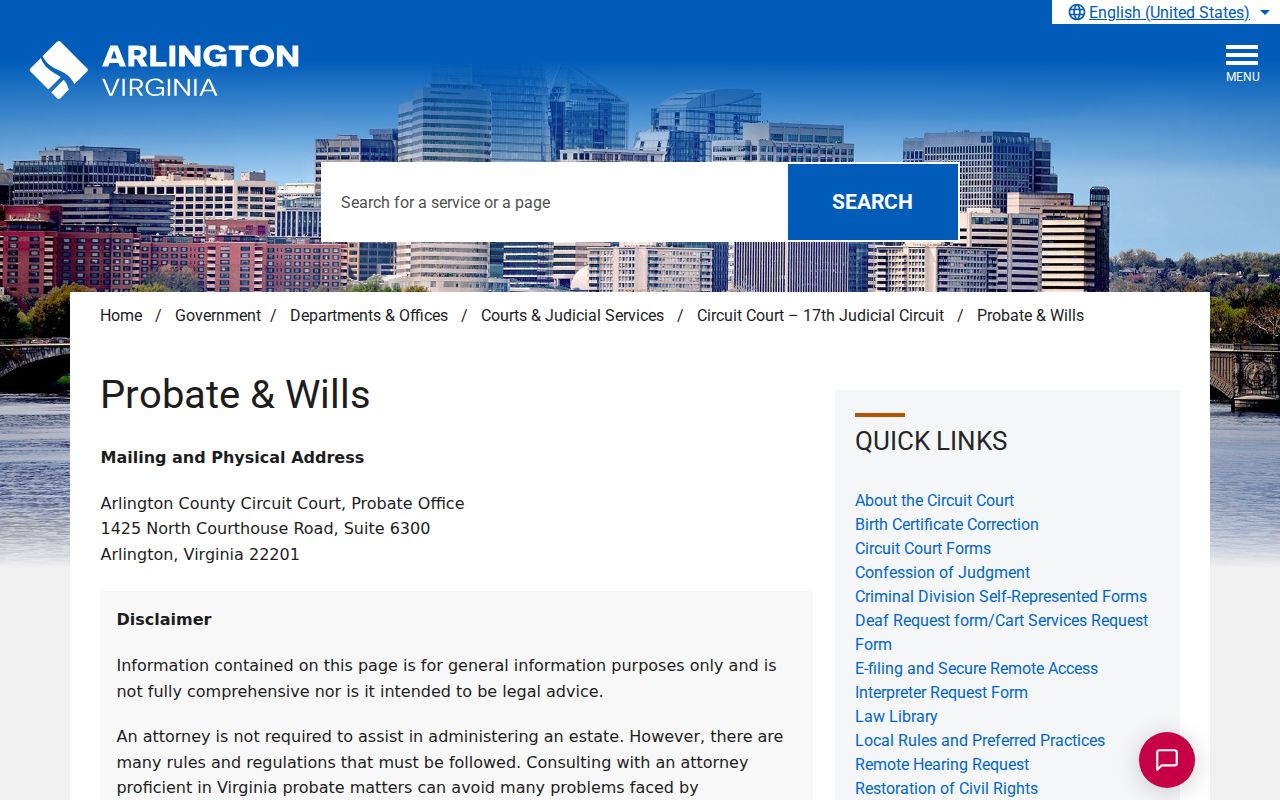
Note: Before adding any probate affidavit or fiduciary deed to your chain, match it against the parcel's land-record description.
Older Deed Books and Local History
Older Fairfax deed books sometimes sit outside web search results. Ask the Fairfax Circuit Court land-record office. Ask whether the deed book, index, or microfilm you need can be consulted in person. Library of Virginia catalogs can surface historic names and maps. Virginia Chronicle adds newspaper references. So do other archival collections. Keep in mind that an archive lead is not the clerk's authoritative deed copy. The City publishes no verified list of Falls Church book runs and shelf locations. Confirm each holding with the office before you visit.
The City's annual land book is another useful thread. It preserves deed and plat references, sales, ownership, and property characteristics across assessment years. For city directories, Mary Riley Styles Public Library is the natural starting point. The same goes for local newspapers. Ask the librarian to confirm directory years, reverse-directory coverage, and obituary indexes. An occupant entry alone, however, is not proof of title.
How Far Falls Church Ownership Records Reach
The dividing line for Falls Church ownership records is 1988. After that year, current land records sit with Arlington. Before it, ownership traces back through Fairfax. The city publishes no single earliest online index year. It offers no complete historic deed-book run and no local plat series covering every era. So treat 1988 as a handoff, not a starting point. Ask Fairfax for the earlier index or deed book you need. Carry the deed's legal description forward so the parcel identity stays intact across jurisdictions.
Older clues can still narrow the search. City directories, newspapers, census material, and library collections often surface a prior name or street address tied to the parcel. Federal census records open to the public after 72 years. Releases now reach 1950 and earlier. Pair those household hints with probate files and recorded deeds rather than relying on any one source. A directory occupant or obituary is a lead, not proof. Only a recorded deed establishes the legal owner of a Falls Church parcel.
Lawful use. Use former-owner research for property history, a title review, or purchase diligence. Do not use historical names, addresses, or deed details to track, threaten, stalk, or harass a living person.