
Falls Church City Tax Record Fields
Falls Church City property tax records draw on two systems. Assessment facts live in one place, billing in another. The Real Property Database holds assessed land and improvement values. It also lists tax year, physical characteristics, sales information, and the parcel key. The Treasurer's Invoice Cloud account works from the bill number and the real-estate RPC. Keep the two straight. A value field is not a balance due. A paid invoice is not a new assessment. Check the source that fits your question before comparing anything.
| Field | What It Shows | Where |
|---|---|---|
| Annual assessment | Land, improvement, total value and tax year | Real Estate Assessment Database |
| Property characteristics | Physical traits and parcel references | Real Estate Assessment Database |
| Sales information | Neighborhood sales and validity codes | Assessment office and actDataScout |
| Tax bill | Current amount, installments, account and payment history | City Treasurer / Invoice Cloud |
| Relief application | Program eligibility and annual filing information | City Treasurer and official forms |
The City assesses at 100 percent of fair market value as of January 1. That assessment is a mass appraisal for taxation, not a private appraisal or agreed sale price. The Treasurer applies the rate adopted by City Council and issues the bill. A purchase price may be higher or lower, and sales are reviewed before the City uses them for assessment comparisons.
January 1 Valuation in Falls Church City
Falls Church City reassesses every year. January 1 is the effective date. The 2026 values are posted in actDataScout. The City's discussion reports a 6.9 percent overall increase in taxable assessed value for 2026, with 5.3 percent attributed to market growth and 1.6 percent to new construction. That context describes the citywide roll. It does not predict any single parcel's change.
The assessment office relies on mass-appraisal models. Sales are verified before they inform value work. For residential property, the City describes one land valuation model used citywide. A newly built or heavily changed parcel can diverge from a long-held home. Before asking staff to correct an error, compare the assessment notice, the prior-year card, the physical characteristics, and the City's reviewed sales data.
Search Fields for Falls Church City Tax Records
The assessment site offers address, RPC, map identify, and Street Listing searches. It has no owner-name search. The Treasurer's online payment route needs two items printed on the bill. These are the bill number and the real-estate RPC. Interface fields can change. So follow the official instructions instead of assuming one database covers assessment and billing.
| Assessment address | Search the situs address; condominium unit spacing is specific. |
|---|---|
| Assessment RPC | Eight-digit City parcel key used to join the parcel and tax records. |
| Street Listing | Browse a street when the house or unit number is unknown. |
| Invoice Cloud bill number | Required with the real-estate RPC to reach the tax account. |
| Owner name | Not available in the City assessment database. |
The City Real Property Database holds the assessment data and physical characteristics. Tax payments run through the separate Treasurer page.
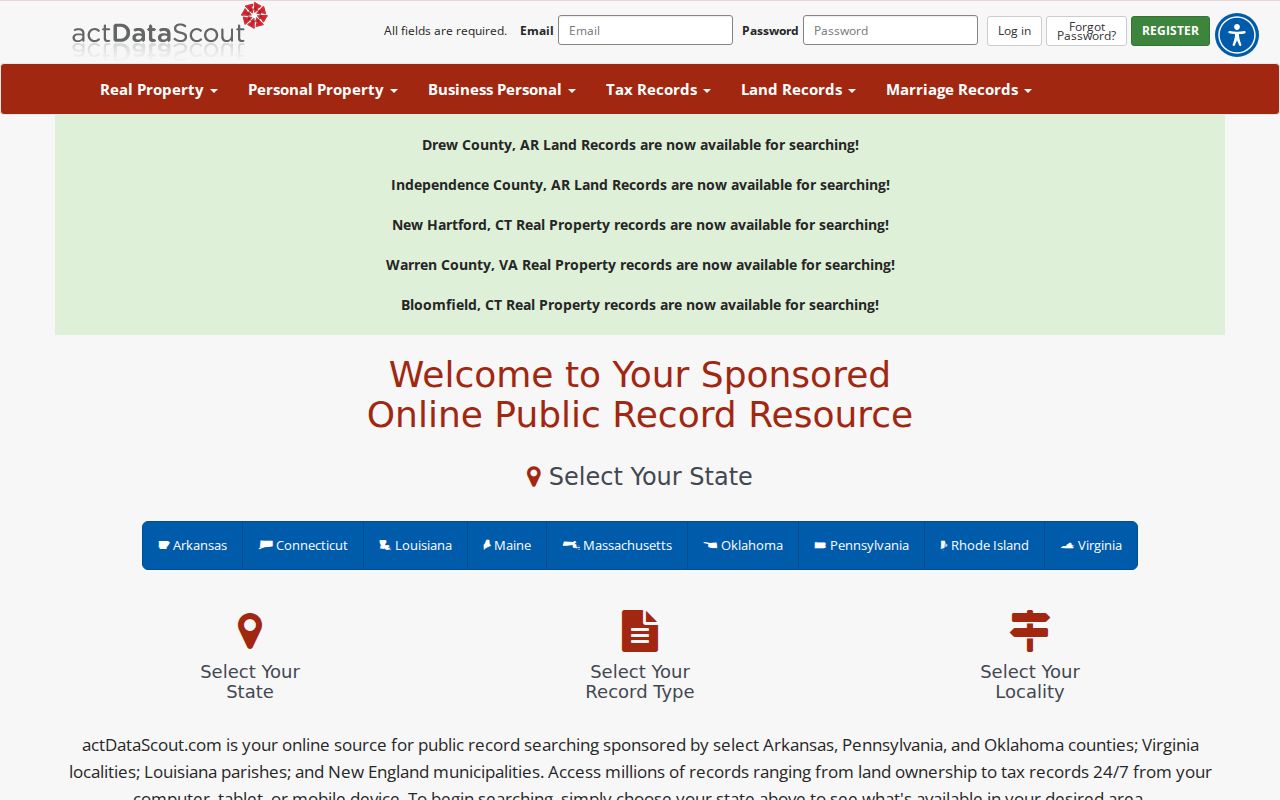
The parcel screen displays each parcel's value detail.
Assessment and Tax Bills Have Different Jobs
Value and billing are separate jobs. The Real Estate Assessment Office calculates value and maintains the owner, property, and sales information. The Treasurer bills and collects the real-estate tax using the rate adopted by City Council. A wrong value goes to the Assessor. So does an appeal. A missing, late, or misposted installment belongs to the Treasurer. A mismatch between assessed value and bill is never resolved through the deed index.
The Treasurer's office sits at 300 Park Avenue in the West Wing. It answers at 703-248-5046 or treasurer@fallschurchva.gov. Real Estate Assessment is at Gage House, 401 Great Falls Street, phone 703-248-5022. The handoff is explained on the City's office pages. They keep a billing question from going to the assessor. They keep a valuation question from becoming a payment dispute.
Find a Falls Church City Tax Bill
For a bill, a payment, or closed-invoice history, use the Treasurer's Invoice Cloud link. The account needs two items. They are the bill number and the real-estate RPC printed on the City's bill. Use the assessment database first to find the parcel. Then contact the Treasurer for the correct account. Never substitute an unrelated parcel ID from another county system.
- Find the property in the City Real Property Database by address or RPC.
- Copy the bill number and real-estate RPC from the Treasurer's notice.
- Open Invoice Cloud to view or pay the account and review invoice history.
- Call the Treasurer about a balance, delinquency, relief program, or payment not reflected online.
- Assessed value
- The City's annual fair-market-value estimate as of January 1, used in tax administration.
- Tax rate
- The rate adopted by City Council and applied by the Treasurer to calculate the bill.
- Tax relief
- A City program that may reduce or assist with a qualifying real-estate tax obligation.
- Tax lien
- A claim associated with unpaid taxes; check the Treasurer and recorded instruments for status.
Falls Church City Payment Routes
The Treasurer lists several payment routes. Online, phone, mail, in-person, and drop box all work. Invoice Cloud can produce PDF or HTML invoices plus paid or closed account history. Electronic check carries no convenience fee. Card fees vary by card type and amount. They display before submission. Phone payments use the City's automated system. Confirm the bill number and parcel key before paying. This matters especially if a mailing address changed after the assessment update.
The City warns that a payment website outage does not waive the due date. It does not waive late fees either. Tax is billed in two installments due June 5 and December 5. Check the fiscal year on the bill. The first installment can fall in the prior calendar year. The current Treasurer page is the source for notices.
The Falls Church Treasurer's page lays out the payment and due-date route. The image below shows that official doorway.
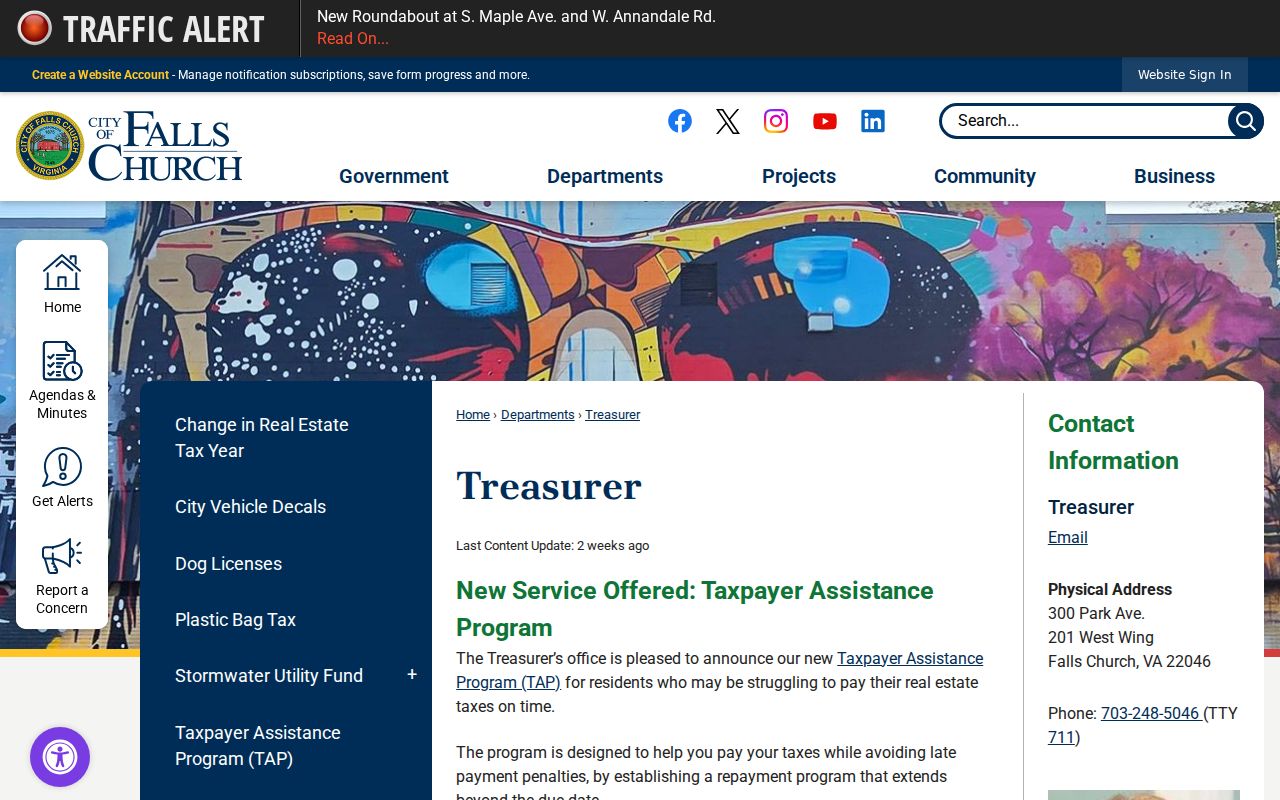
Check the installment and the account before you pay.
Tax Relief and TAP in Falls Church City
Falls Church City runs several tax-relief programs. Older and disabled residents qualify for one track. Disabled veterans, surviving spouses, and surviving spouses of service members killed in action have programs of their own. The Taxpayer Assistance Program helps a resident who cannot pay on time by setting up a repayment arrangement. Each program carries its own eligibility rules and forms. Relief is not an automatic credit.
The application asks for the City property ID printed on the tax bill, and April 15 is the annual filing deadline for real-estate relief. Forms and dates are year-specific. The Treasurer can confirm the current year's instructions before filing and answers payment questions at 703-248-5046, while Real Estate Assessment handles the assessed value itself.
Sales Codes on Falls Church City Assessments
A recorded price is not always an open-market sale. Falls Church City tags every sale in its sales data with a validity code. Code 01 marks a valid sale. Code 02 means an estate sale. Code 03 is invalid. Code 04 flags a personal or family transfer, and 05 a land sale. New construction carries code 06. Code 07 marks a sale with no listing. Code 08 means pending staff review, and 00 covers anything other or undefined. That is why a sale price alone should never be read as a measure of tax value.
The City posts reviewed 2025 sales data in actDataScout for the current assessment cycle, and those sales remain subject to review. Compare like property types and dates, read the code and notes first, and ask the assessment office how it applied the record; the Treasurer cannot revise a valuation through a payment-account question.
Appealing a Falls Church City Assessment
An appeal targets the value, not the size of the bill. A higher-than-expected tax bill is not grounds by itself. Falls Church offers two routes: an assessor review and a separate Board of Equalization. The 2026 assessor review deadline was April 15. The 2026 Board deadline was June 5. Published deadlines change with each assessment year. So use the current notice and forms.
Keep the assessment notice, parcel card, physical-characteristic details, and recent comparable-sale information together. Add physical-characteristic details and recent comparable sales. A correction request should point to a specific error or to fair-market value as of the City's January 1 date. The assessment office's appeal material spells out the evidence and procedure that apply. An appeal never pauses an unpaid installment deadline, so the Treasurer stays the contact for the bill while the valuation review runs.
Appeal window. The City listed April 15, 2026 for assessor review and June 5, 2026 for a Board of Equalization appeal. Check the next notice and current official forms for the applicable year.
Falls Church's appeal process page lists the official steps. Current real-estate forms sit alongside it, and the Falls Church City property value section covers value questions separately.